Anyone about to dig into a new garden bed in Brockton runs into the same wall pretty quickly. Every seed packet and nursery tag references a zone number, but nobody explains what that number actually changes about your planting plan.
Skip past it, and the mistakes pile up fast. A tender vegetable goes into cold soil too soon, or a shrub rated for a milder climate dies back in its first winter.
The reason this happens so often is that a “zone” isn’t really about your neighborhood’s weather forecast. It’s a specific measurement tied to how brutal Brockton’s coldest winter nights typically get, and that number governs which plants can survive here without extra help.
This guide gives you that exact number, plus what it actually means once you start choosing vegetables, flowers, and trees for your yard.
What Zone Is Brockton, MA, In for Plants
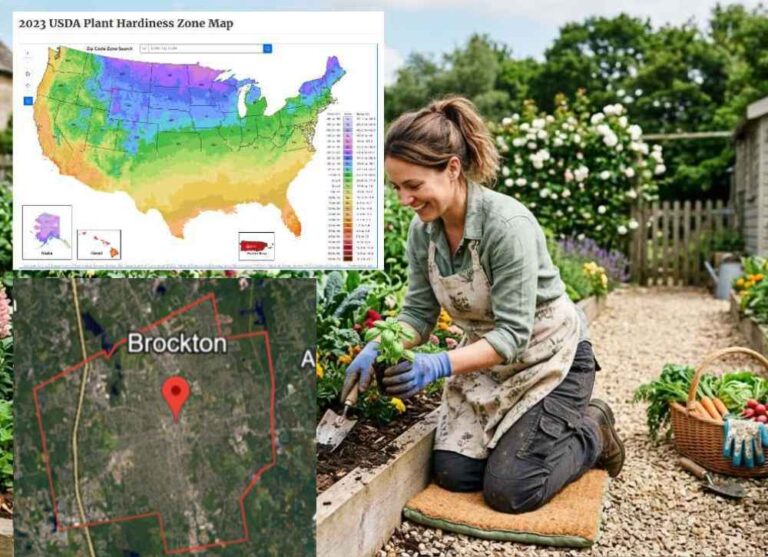
Brockton sits in USDA Hardiness Zone 6b. According to plant mapping data pulled from the 2023 USDA Hardiness Zone update, this is unchanged from the 2012 map, meaning Brockton’s rating has held steady across both versions.
In practical terms, Zone 6b means the coldest winter night in an average year falls somewhere between -5 and 0 degrees Fahrenheit. That’s the number nursery tags and seed catalogs are referencing when they list hardiness.
This isn’t a measure of rainfall, humidity, or summer heat. It only tracks how severe winter cold gets, which is exactly what determines whether a perennial, shrub, or tree can survive planted outdoors year-round.
Brockton shares this same 6 B rating with much of Greater Boston, including Cambridge, Newton, and Somerville. Some pockets closer to the coast and toward the Rhode Island border edge into the slightly milder Zone 7a, but Brockton itself sits solidly in 6b.
Vegetables
Zone 6b sets the outer boundary for what survives Brockton’s winter, but vegetables are grown as annuals, so their planting window depends on frost tolerance rather than winter survival. Timing is everything here.
Hardy vegetables like peas, spinach, and lettuce tolerate light frost without damage, so they can go into the ground as soon as the soil can be worked in early spring.
Warm-season vegetables work in reverse. Tomatoes, peppers, cucumbers, and squash are frost sensitive, and setting them out too early risks losing the whole planting to one cold night.
Most Brockton gardeners hold off on tender transplants until mid to late May, well past the average last frost date, to build in a safety margin. Once those tomatoes are established, staying on top of watering becomes just as important as the initial timing.
Fall crops like carrots, kale, and beets can go back into the ground in mid to late summer, giving Brockton a realistic second harvest before the first fall frost shows up.
Flowers and Perennials
Perennials play by a different set of rules than vegetables, since they stay in the ground through winter rather than finishing out in one season. Their survival depends directly on whether they’re rated for Zone 6b or colder.
Anything rated for Zone 6 or lower should reliably return each spring in Brockton without extra winter protection. Plants rated only for Zone 7 or warmer are a real risk here and may not survive a harsh winter.
Reliable perennial choices for Brockton include:
- Coneflower, tolerant of cold winters and reliable through summer heat
- Black-eyed Susan, a tough native that spreads and returns each year
- Peonies, long-lived bloomers that actually need cold winters to flower well
- Daylilies, low-maintenance perennials well-suited to Zone 6b winters
- Hostas, shade-tolerant perennials common across New England landscapes
Annual flowers follow the same clock as tender vegetables, since they only need to survive a single season. Marigolds, zinnias, and petunias can go outside once the last frost has passed. For gardeners wanting color earlier in the season, some hardy annuals can handle a cooler start without waiting until late May.
Bulbs like tulips and daffodils actually depend on Brockton’s cold winter to bloom properly the following spring, which is why they go into the ground in fall rather than spring.
Trees and Shrubs
Trees and shrubs are a longer-term investment than anything else in the garden, so getting the zone match right matters even more. A tree planted outside its tolerance won’t just struggle for a season; it can fail outright within a year or two.
Most nursery stock sold locally in Brockton is already rated for Zone 6 or colder, making buying from local nurseries a fairly safe default. Ordering from growers in warmer climates online carries a higher risk of a mismatch.
Reliable tree and shrub options for the zone include:
- Red maple, a fast-growing native tree common across New England
- Serviceberry, a small tree offering spring blooms and edible summer fruit
- Hydrangea, a shrub that handles Brockton winters well when properly mulched
- Eastern white pine, a hardy evergreen suited to the region’s soil
- Rhododendron, a flowering shrub tolerant of cold with light winter protection
Fall tends to be the stronger planting window for most trees in Brockton, since cooler air lets roots settle in before winter without the added stress of summer heat. If you’re relocating an existing tree instead of planting new stock, the same seasonal logic applies to transplanting trees safely.
Spring planting is still workable, but young trees need consistent watering through their first Brockton summer while their root systems are still establishing.
USDA Hardiness Zone Map
The USDA Hardiness Zone Map splits the country into bands based on average annual minimum winter temperature, with each band further divided into an “a” and “b” half zone for more precision.
Brockton’s 6b rating comes straight from this map, built using thirty years of climate data rather than any single unusually cold or warm winter. Zoomed out, this places Brockton within the broader pattern seen across Massachusetts, where colder interior zones give way to milder ones closer to the coast.
The current version, released in 2023, replaced the older 2012 map using updated climate normals gathered from NOAA weather stations. Nearby cities like Worcester and Springfield run a touch colder than Brockton, while Cape Cod sits noticeably warmer thanks to the surrounding ocean.
You can check your exact zone using the official USDA Plant Hardiness Zone Map tool, which allows a direct ZIP code search for the most accurate result.
Since the map only tracks winter cold, it doesn’t account for rainfall, humidity, or summer heat, all of which still shape what actually thrives in a Brockton yard.
Brockton, MA Average Last Frost Date
Brockton’s hardiness zone tells you about winter survival, but the last spring frost date is what actually drives your planting calendar. Local frost records show the average last frost date around April 15, based on thirty years of weather station data.
That date marks roughly a fifty-fifty split, meaning frost is just as likely to occur after it as before. Planting tender vegetables right at that mark still carries real risk.
For a safer margin, Brockton gardeners typically wait until early June, when the odds of another cold night drop to nearly 90%, before setting out frost-sensitive transplants like tomatoes and peppers.
Hardy crops don’t carry that same risk. Since they tolerate light frost, they can go into the ground weeks earlier without waiting for that extra safety buffer.
Best Plants for Zone 6b/7a
Pulling everything together, here’s a fast reference for what performs well across Brockton’s Zone 6b conditions, drawing directly from the categories above.
Vegetables Worth Planting First
- Peas and spinach are sown as soon as the soil can be worked in spring.
- Lettuce and kale are tolerant of light frost and cool spring soil.
- Tomatoes and peppers, best planted after early June for safety.
- Carrots and beets are ideal for a second planting in late summer.
Flowers That Handle Brockton Winters
- Coneflower and black-eyed Susan, both dependable native perennials
- Peonies and daylilies, low-maintenance bloomers built for cold winters
- Tulips and daffodils, fall-planted bulbs that need winter chill to bloom
Trees and Shrubs Built for the Zone
- Red maple and serviceberry, both strong native tree choices
- Hydrangea and rhododendron, flowering shrubs suited to Zone 6b
- Eastern white pine, a dependable evergreen for year-round structure
Planting Zone vs Growing Zone Difference
Gardeners searching online often come across both “planting zone” and “growing zone” and assume they’re separate systems. In reality, they describe the same thing.
Both terms refer to the USDA Hardiness Zone system, just phrased differently depending on the source. Nurseries, seed catalogs, and gardening sites tend to pick whichever term feels more natural for their audience.
Some sources also use “hardiness zone” and “climate zone” interchangeably, though “climate zone” occasionally refers to a broader system that accounts for rainfall and humidity, not just winter cold.
For Brockton specifically, regardless of which label a plant tag uses, the number that actually matters stays the same: 6b.
Putting Brockton’s Zone Number Into Action All Season Long
Zone 6b is the foundation, but it only becomes useful once it’s tied to real dates and real plant decisions. That’s where the last frost date comes into play.
Treat early June as your safe marker for tender vegetables and annual flowers, while hardy crops and cold-tolerant perennials can go in weeks earlier without that same risk.
For anything permanent, like trees, shrubs, and perennial flowers, stick to varieties rated for Zone 6 or colder, and favor fall planting whenever it fits your schedule.
Keep this rhythm in mind through the year: hardy vegetables and bulbs in early spring or fall, tender crops starting in June, and trees ideally planted once summer heat has eased.
Once the zone number becomes a planning tool instead of just a label on a tag, the rest of Brockton’s planting calendar falls into place on its own.