A fig tree in December looks nothing like the same tree in July. The leafy, fruit-heavy plant turns into a bare, gray skeleton almost overnight.
That transformation throws a lot of growers off, especially in the first year or two of owning a fig tree.
Here’s the part most articles skip: bare branches can mean three completely different things. Healthy dormancy, deliberate winter protection, and real cold damage often look confusingly similar at a glance.
Extension horticulturists field this exact question every winter, and the answer always comes down to a handful of specific, checkable details rather than a general impression.
This guide walks through those details one by one, so you can look at your own tree and know exactly what you’re seeing, using the same instincts that go into any solid plan to prepare a garden for winter.
- What Does a Fig Tree Look Like in Winter?
- What a Healthy Dormant Fig Tree Looks Like?
- The Science Behind a Fig Tree's Winter Appearance
- What a Winterized or Protected Fig Tree Looks Like?
- What a Damaged or Dying Fig Tree Looks Like in Winter?
- How to Run the Scratch Test Like a Pro?
- How a Fig Tree's Winter Appearance Differs From Its Summer Appearance?
- FAQ's
- Reading Your Fig Tree's Winter Appearance to Know What It's Telling You
What Does a Fig Tree Look Like in Winter?
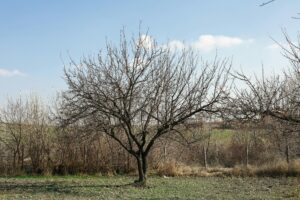
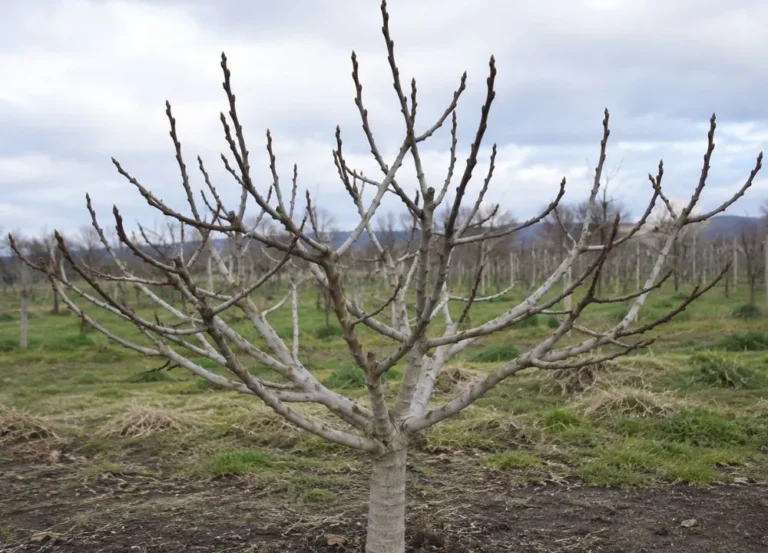
In broad terms, a fig tree in winter is bare, gray, and reduced to its basic branch structure.
The leaves drop completely, since figs are deciduous trees rather than an evergreen tree that holds foliage year-round.
If you’ve ever wondered whether evergreens lose their leaves too, the short answer is rarely, which is exactly why a fig’s bare winter look stands out so much by comparison.
What remains is a network of smooth, grayish-brown branches with a faint silvery sheen, thicker near the trunk and noticeably thinner toward the tips.
Where each leaf once attached, you’ll notice an unusually large, distinct mark on the wood, bigger and easier to spot than the leaf scars on most backyard trees.
What a Healthy Dormant Fig Tree Looks Like?
A fig tree resting normally for winter, with no protection and no damage, still shows a specific, consistent look.
The bark stays smooth and unbroken along every branch, with no cracks, splits, or dark discoloration anywhere on the surface.
Bend a small branch gently and it should flex slightly instead of snapping. That give is a strong sign the wood is still alive underneath.
Buds sit small, firm, and tightly closed along the branches, not shriveled, papery, or crumbling when you press them.
Roots stay active even while the top rests, so it still pays to check the same signs a plant needs water that you’d look for during the growing season, just less often.
The Science Behind a Fig Tree’s Winter Appearance
The reason figs look so dramatic in winter comes down to the wood itself, not just the missing leaves.
Understanding that biology makes it much easier to judge whether a given branch is simply resting or genuinely in trouble.
Why Fig Wood Behaves Differently Than Other Trees?
Fig wood is notably soft and water-rich compared to the wood of most other backyard fruit trees.
That softness makes it more vulnerable to cold injury, since water-heavy tissue is more likely to rupture as it freezes. The same basic trade-off explains how deciduous trees survive winter in general, by shutting down the most vulnerable tissue first.
Growers who track this closely describe the process as lignification, the gradual hardening of new wood that happens as a branch matures and prepares for cold weather.
Younger, less lignified growth near the branch tips is almost always the first part of the tree to show winter stress.
The Temperature Thresholds That Change Everything
Cold damage in figs isn’t random. It follows fairly predictable temperature thresholds that growers can plan around.
Once temperatures drop to around 32°F, leaves typically fall and the tree begins settling into true dormancy.
Between roughly 15°F and 17°F, especially if cold lasts several hours, the cambium layer just under the bark can start to rupture.
By the time temperatures fall into the 10°F to 15°F range, branch tips and fruiting wood are commonly at real risk of dying back.
These thresholds explain why growers checking an Alaska planting zone chart, a Chicago planting zone map, or a Denver planting zone guide take fig care far more seriously than growers in milder states.
What a Winterized or Protected Fig Tree Looks Like?
A protected fig tree looks nothing like its natural winter shape, since the protection becomes the dominant visual feature.
In milder climates, protection might just mean a thick ring of mulch around the base, with the branches left fully visible above it. Figuring out how much mulch that ring actually needs, and choosing between straw, wood chips, or pine straw mulch, changes the final look slightly.
Further north, growers commonly wrap the trunk and lower limbs in burlap, straw, or blankets, creating a bulky column rather than bare wood. Anyone following a full protect a fig tree plan will recognize this shape immediately, whether they’re planting a fig tree in Georgia, in North Carolina, or wondering if fig trees grow in Massachusetts at all.
In the coldest regions, some growers bend the entire tree down and bury it under a mound of soil, a common approach among gardeners checking whether figs grow in Colorado before committing to one outdoors.
Whatever the method, the look is intentional. A wrapped or buried fig tree is one its owner fully expects to see leaf out again, much like any tree moved with a proper transplanting trees safely approach.
What a Damaged or Dying Fig Tree Looks Like in Winter?
Real damage looks distinctly different from both normal dormancy and deliberate winter protection, once you know the specific signs.
It also helps to separate damage by cause, since cold, wildlife, and disease each leave their own particular fingerprints on the wood.
Signs of Cold and Freeze Damage
Bark that looks shriveled, blackened, or split along a branch is one of the clearest signs that section has frozen.
Bark can split when the cambium layer underneath expands faster than the bark itself can stretch, often from rapid temperature swings, a pattern documented on both zone maps like Ohio’s planting zone guide and Indiana’s planting zone guide.
Underneath the bark, frozen wood typically looks sunken, discolored, or streaked with brown instead of the moist green of living tissue.
A reddish tint near branch tips is also a common early warning sign, according to fig-growing communities that track freeze damage closely.
Signs of Animal and Wildlife Damage
Not every bit of winter bark damage comes from cold. Rabbits and voles are a major, often overlooked cause too.
Heavy snow limits food for wildlife, which pushes rabbits and voles toward the bark of exposed shrubs and young trees, so it helps to keep rabbits out of reach beforehand.
Girdling from animals looks like clean, gnawed strips of missing bark, usually low on the trunk, rather than the blackened or split look of frost damage.
If bark is stripped away in a neat ring around the trunk, that pattern points toward wildlife rather than winter cold.
Signs of Disease Rather Than Cold
Occasionally, unusual bark color or oozing sap has nothing to do with either cold or animals.
If a tree shows odd symptoms but hasn’t been exposed to real cold, it’s worth reviewing general reasons plants aren’t thriving instead of automatically blaming winter.
A branch that looks fine but still fails to leaf out can also point back to root stress, the same kind covered under why a plant is turning yellow during the growing season.
How to Run the Scratch Test Like a Pro?
The scratch test is the single most reliable way to check whether a branch is alive, and it takes seconds to perform.
The living cambium layer sits just a few millimeters beneath fig bark, according to a university extension network cited later in this guide.
Follow these steps to check your own tree without causing unnecessary harm.
- Use a clean, sharp pruning blade or a pocket knife for the test.
- Lightly scrape a patch of bark about the size of a pea.
- Start on younger wood near the branch tips first.
- Look for moist, green tissue directly beneath the surface.
- Work toward the trunk if the tips show brown, dry tissue.
- Stop scraping once you reach clearly living, green wood.
Green tissue means that section is alive. Brown or dry tissue means it has died and can eventually be pruned back to healthy wood, following the same general keep plants alive principles you’d use anywhere else in the yard.
If you end up removing dead wood, it’s worth saving a healthy piece to try to propagate a fig tree from a cutting instead of losing the variety entirely.
How a Fig Tree’s Winter Appearance Differs From Its Summer Appearance?
Comparing the two seasons side by side makes it far easier to judge what’s actually normal.
- Summer: broad green leaves; winter: bare branches with visible leaf scars.
- Summer: soft, flexible new growth; winter: firmer, woodier stems throughout.
- Summer: bark hidden under foliage; winter: bark fully exposed for inspection.
- Summer: developing or ripening fruit; winter: no fruit anywhere on the branches.
- Summer: dense, rounded canopy shape; winter: open, angular branch silhouette.
None of these winter traits point to a problem by themselves, and the same seasonal swing shows up in other summer fruit trees too, not just figs.
FAQ’s
Is It Normal for a Fig Tree to Look Completely Dead in Winter?
Yes, and it’s actually the most common reaction from new growers every single year.
A fully dormant fig tree with no leaves, no fruit, and gray bark can look convincingly lifeless while staying completely healthy underneath.
How Long Should I Wait Before Deciding a Branch Is Dead?
Extension experts generally recommend waiting until around mid-May before treating bare wood as confirmed dead.
Figs are notoriously slow to show spring growth, so this timeline matters more than it does for the best time to transplant trees or start other spring work.
Can a Tree Recover Even If the Top Looks Completely Dead?
Often, yes. Established fig trees with healthy roots regularly resprout new branches from the base after the top dies back.
If you’d rather start fresh, this is also a good moment to look into taking fig cuttings from a healthier tree nearby.
Do I Need to Worry About Occasional Blackened Branch Tips?
Not usually. Some tip dieback is considered a normal, expected part of growing figs in a borderline climate, whether you’re checking a Georgia planting zone map or a Massachusetts planting zone guide.
Only worry if the blackened, dead-looking wood extends well past the tips and into thicker, older branches.
Reading Your Fig Tree’s Winter Appearance to Know What It’s Telling You
Every detail in this guide points to the same core idea. A fig tree’s winter look is a message, not a verdict.
Bare wood with smooth bark and tight buds is telling you the tree is simply resting, exactly as it should through winter.
A bulky, wrapped trunk is telling you someone stepped in to help it through a harder climate, the kind faced by growers checking a zone 5 frost dates chart, a Texas planting zone guide, or timing a fig tree planted in fall for the first time.
Blackened bark, brittle snapping branches, and dead cambium are telling you the cold, an animal, or disease reached further than the tree could handle.
Learning to separate these signals, branch by branch and season by season, is the real skill behind a question that looks simple on the surface.