Lakewood stretches along Denver’s western edge, and many gardeners here assume they share the same growing conditions as the rest of the metro area. That assumption is mostly right, but it misses some important detail.
Parts of Lakewood climb toward the foothills, where elevation rises and temperatures cool. Other neighborhoods sit on the flatter eastern side, where urban development and lower ground create slightly warmer pockets. That variation means two gardeners living five miles apart in Lakewood could be planting in different zones.
Getting your zone right prevents wasted money on plants that will not survive winter. It also opens up possibilities you might not realize your yard supports.
This post covers exactly what zone Lakewood falls in, how local geography creates variation, and which plants match these conditions best.
What Planting Zone Is Lakewood, Colorado?
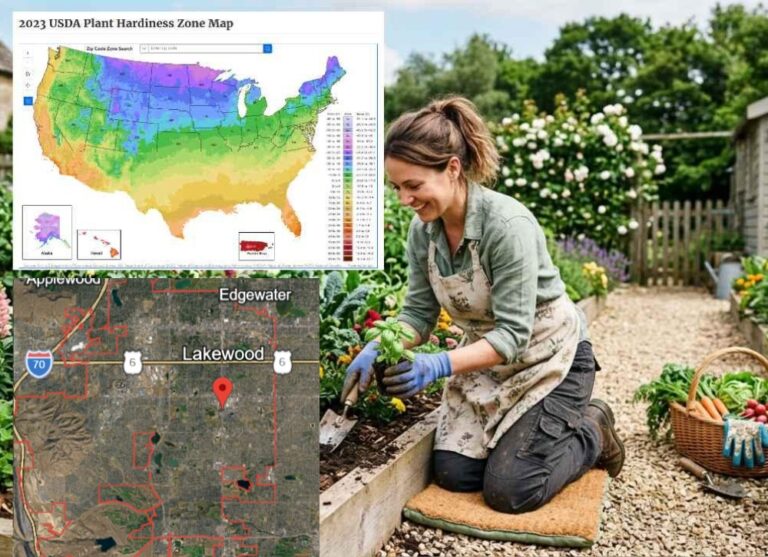
Lakewood, Colorado falls in USDA Hardiness Zones 5b and 6a, according to the 2023 USDA Plant Hardiness Zone Map.
Zone 6a covers the majority of Lakewood, particularly the lower-elevation neighborhoods closer to Denver. Minimum winter temperatures in Zone 6a range from -10°F to -5°F.
Zone 5b applies to the western portions of Lakewood that push closer to the foothills. Minimums in Zone 5b sit between -15°F and -10°F. That five-degree difference affects which perennials, shrubs, and trees survive the coldest nights of winter.
The 2023 map draws on temperature records from 1991 through 2020, processed by the PRISM Climate Group at Oregon State University. Their algorithms adjust for elevation, slope, and nearby structures when assigning zones at the neighborhood level.
Why Lakewood Shares Denver’s Growing Conditions
Lakewood borders Denver to the west, and at its lowest points, the two cities sit at similar elevations and experience nearly identical weather. But Lakewood also reaches toward higher ground, and that gradient is where the zone split shows up.
Zone 6a in Most Neighborhoods
The eastern and central parts of Lakewood sit at roughly 5,500 feet in elevation, close to Denver’s 5,280 feet. Streets, buildings, and pavement absorb heat during the day and release it at night, creating the urban heat island effect that bumps conditions into Zone 6a.
A Lakewood gardener who writes at the Jefferson County Master Gardener blog noted that her Lakewood garden shifted from Zone 5 to Zone 6a when the USDA updated its maps. That change reflects a gradual warming trend in the 30-year temperature averages, not a sudden climate shift.
Zone 6a aligns Lakewood with cities like Denver, Aurora, and parts of Colorado Springs. If a plant thrives in those cities, it will likely do well in most Lakewood yards.
Zone 5b at Higher Elevations
The western edge of Lakewood gains altitude as it approaches the foothills near Green Mountain, Bear Creek Lake Park, and the areas closer to Morrison. These neighborhoods sit higher and face more exposure to cold air draining off the mountains.
If your property sits above 5,800 feet or faces north on a hillside, you may need to treat your garden as Zone 5b rather than 6a. Choosing plants rated for Zone 5 conditions provides a safety margin against those colder nights.
North-facing slopes and low valleys where cold air pools are the spots most likely to behave as 5b. South-facing walls and sheltered courtyards, on the other hand, can sometimes push conditions even warmer than the 6a baseline.
Frost Dates and Growing Season in Lakewood
Garden.org data for Lakewood shows an average last spring frost around May 12 and a first fall frost near September 30. That gives Lakewood roughly 141 frost-free growing days.
This places Lakewood right in the middle of Colorado’s Front Range gardening calendar. It is shorter than Grand Junction’s 174 days but significantly longer than mountain communities like Evergreen, which manage only about 87 days.
Warm-season crops like tomatoes, peppers, and squash go in the ground after May 12 or once a full week of frost-free nights appears in the forecast. Cool-season vegetables like lettuce, peas, and spinach can start as early as late March if the soil is thawed.
Fall planting is underused in Lakewood. Garlic goes in the ground in September or October and grows through winter for a summer harvest. Lettuce and kale can also produce a second round if sown by early August.
Best Plants for Lakewood Gardens
With Zone 6a conditions in most of the city and 141 growing days, Lakewood supports a solid variety of vegetables, fruit, and ornamentals.
Vegetables and Herbs
The 141-day season accommodates both fast-maturing and standard-season vegetable varieties. Structure your garden around a spring-to-fall rotation:
- Lettuce and greens go in early spring and again for fall harvest
- Tomatoes transplant after mid-May with room for full-size varieties
- Peppers, beans, and squash follow the same post-frost schedule
- Herbs like basil, cilantro, dill, and parsley grow well in Lakewood’s sun
- Root vegetables like carrots and beets tolerate light fall frosts
Starting seeds indoors by late March gives warm-season crops a valuable jump on the season. A sunny south-facing window or a simple grow light setup is enough for most home gardeners.
Ornamental Trees and Perennials
For shade trees, consider honeylocust, Kentucky coffeetree, or bur oak. All three carry Zone 5 or 6 ratings and handle the alkaline clay soil that covers much of Lakewood.
Flowering crabapples add spring color and attract pollinators. Serviceberry is another strong pick that produces edible berries in summer and vivid fall foliage.
Perennials that perform well in Lakewood include coneflower, salvia, penstemon, and catmint. These species tolerate full sun, low water, and the dry air that defines Colorado gardening. They also return reliably year after year once established.
If you want to try fruit trees, sour cherry and cold-hardy apple varieties are the safest bets for Zone 6a. Peach trees can produce in Lakewood, but late spring frosts occasionally destroy the blossoms and wipe out the year’s crop.
Practical Tips for Lakewood Gardeners
A few habits specific to the Lakewood environment make a measurable difference in how your garden performs.
Soil amendment is the first step. Much of Lakewood sits on dense clay that holds water in spring and bakes hard in summer. Mixing in two to three inches of compost each season breaks up that structure and improves both drainage and water retention at the same time.
Watering consistently but not excessively keeps plants healthy without promoting root rot in heavy soil. Drip lines or soaker hoses placed under mulch deliver water slowly and directly to root zones.
Mulching with organic material like wood chips slows evaporation, moderates soil temperature, and feeds beneficial organisms in the soil. Two to three inches around the base of plants is the target depth.
Hail protection deserves mention. Lakewood catches its share of summer storms, and a single hailstorm can flatten a vegetable garden in minutes. Keeping lightweight netting or row cover fabric in your garage means you can cover beds quickly when a storm warning appears.
Zone 6a Is Your Starting Point
Lakewood’s Zone 6a designation gives you a clear framework for every planting decision. Match your plants to that number, adjust for your specific microclimate if you sit near the foothills, and build your season around the May 12 to September 30 frost window.
With those pieces in place, a Lakewood garden delivers rewarding results from spring through fall.
For zip-code-level zone detail, the USDA Plant Hardiness Zone Map remains the most accurate reference available.