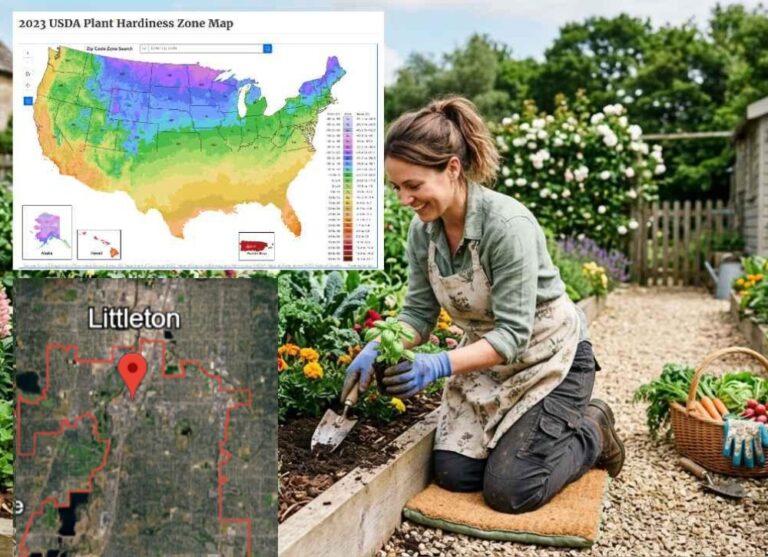
Littleton sits just south of Denver, and its mild Front Range position fools a lot of gardeners into thinking they can plant the same things at the same time as someone in Kansas or Missouri. They can’t. The elevation here hovers around 5,400 feet, which means late spring frosts, intense sun, and dry air work together to make growing conditions trickier than the zone number alone suggests.
If you skip the step of learning your exact planting zone, you risk buying perennials that freeze out by January or planting warm-season vegetables weeks too early. Both mistakes cost time and money, and both are easy to avoid once you know where Littleton falls on the USDA map.
This guide breaks down Littleton’s zone classification, frost window, and what that zone number actually tells you about your garden.
Littleton Falls in USDA Hardiness Zone 6a
According to the 2023 USDA Plant Hardiness Zone Map, Littleton is classified as Zone 6a. That designation means the average annual extreme minimum winter temperature ranges from -10°F to -5°F.
The USDA map was developed by the PRISM Climate Group at Oregon State University. It uses 30 years of climate data to calculate these minimums, which helps gardeners pick perennials, shrubs, and trees that will survive winter in their specific area.
Littleton shares this 6a classification with several nearby cities. If you have looked into the planting zone for Denver or the planting zone for Aurora, you will notice they carry the same designation.
What Zone 6a Actually Means for Your Garden
The zone number is a cold-hardiness rating, not a full growing guide. It tells you the coldest temperature a perennial plant needs to survive if it is going to live year after year in Littleton.
When you buy a tree labeled “hardy to Zone 6,” that tree should handle winters here without dying back. A tree labeled “Zone 7 and above” probably will not make it through a harsh February night.
It Does Not Tell You Everything
Zone 6a says nothing about summer heat, rainfall, soil type, or wind exposure. Littleton gets about 16 inches of rain per year, which is far below the national average. It also receives intense UV at altitude, which stresses plants differently than lowland sun.
So while the zone number is your starting point for picking perennials and woody plants, you still need to factor in Littleton’s dry, sunny, and occasionally windy climate before you finalize any planting decisions.
Cold Pockets Within Littleton
Not every yard in Littleton experiences the same winter low. Properties near Chatfield Reservoir or in low-lying areas along the South Platte corridor tend to trap cold air at night, creating small frost pockets that behave more like Zone 5b.
Meanwhile, homes on south-facing slopes or near heat-absorbing pavement often stay a half-zone warmer. Your specific microclimate can shift your effective zone by a noticeable margin.
Frost Dates and the Growing Season
Knowing the zone alone is not enough if you want to grow vegetables. For annual crops, frost dates matter more than the hardiness zone.
Data from Garden.org shows that Littleton averages about 131 frost-free growing days. The last spring frost typically falls around May 18, and the first fall frost arrives near September 26.
That gives vegetable gardeners a window that works for most warm-season crops, though it feels tight for anything that needs 100 or more days to mature. Starting seeds indoors is almost a necessity here, especially for tomatoes in Colorado.
What Grows Well in Zone 6a Littleton
With proper timing and soil preparation, Littleton gardeners can grow a solid variety of edibles and ornamentals. The key is matching your plant choices to both the zone and the local climate quirks.
Vegetables Worth Planting
Cool-season crops like lettuce, spinach, kale, and peas do well when sown in early to mid-April. They can handle light frost and actually prefer Littleton’s cooler spring nights.
Warm-season staples like tomatoes, peppers, squash, and beans go outdoors after mid-May. You can read more about when to plant lettuce in Colorado for specific timing based on your frost window.
Garlic planted in Colorado does best when cloves go into the ground in fall, usually around mid-August to September. It overwinters and matures by the following summer.
Trees and Perennials That Survive Here
Zone 6a supports a wide range of fruit trees. Peach trees, apple trees, and pear trees all perform well if you select cold-hardy varieties. Littleton gardeners who are curious about stone fruit can explore peach season in Colorado for more detail.
For ornamental trees, Colorado blue spruce, crabapple, and honeylocust are reliable picks. Among perennials, echinacea, black-eyed Susan, lavender, and Russian sage all thrive in Zone 6a’s cold winters and hot, dry summers.
How Littleton Compares to Nearby Colorado Cities
Littleton’s Zone 6a status puts it on par with most of the Denver metro area. Cities like Lakewood and Broomfield sit in the same zone.
Head north to Fort Collins or Boulder, and you drop into Zone 5b, where winter lows dip to -15°F. Go south toward Castle Rock or Colorado Springs, and you will find a mix of 5b and 6a depending on exact elevation.
West toward the mountains, zones shift quickly. Grand Junction on the Western Slope sits in Zone 6b to 7a, with significantly warmer winters and longer growing seasons.
Tips for Gardening in Littleton’s Zone
Littleton’s climate rewards gardeners who plan ahead rather than reacting to weather as it comes. A few targeted habits make a noticeable difference.
Mulching in late fall protects root systems through winter cold snaps. You can find a full walkthrough on how to prepare your garden for winter for step-by-step guidance.
Watering deeply but less often suits Littleton’s dry soil better than frequent shallow watering. Understanding how often to water your plants can prevent both drought stress and root rot, which happens more than people expect in Colorado’s clay-heavy soils.
Starting seeds indoors around early to mid-March gives warm-season vegetables enough lead time to mature before the first fall frost cuts the season short. The two main factors that affect planting time apply directly to Littleton’s compressed growing calendar.
Final Thoughts
Littleton, Colorado sits in USDA Hardiness Zone 6a, with average winter lows between -10°F and -5°F. The city gets about 131 frost-free days each year, running from mid-May through late September.
That zone classification, paired with Littleton’s altitude, dry air, and intense sun, shapes every decision you make in the garden. Once you learn to work with those conditions rather than fighting them, growing food and landscaping in Littleton becomes a lot more rewarding.