October puts tomato growers at a fork in the road, and which way you turn depends entirely on where you live.
For some folks, this month is a green light. The weather is finally cool enough to start a whole new crop that will fruit through fall and even winter.
For everyone else, October is the opposite. It’s the last stretch of a season that’s already winding down, a race to ripen whatever is still clinging to the vine before the cold shuts things off.
The trouble is that most advice online picks one of those stories and ignores the other. So this guide sorts out which path is actually yours, then tells you exactly what to do about it.
Can I Grow Tomatoes in October?
The honest answer is that it depends on your climate, and there’s a simple bit of math that settles it.
A tomato needs roughly 60 to 85 warm days from transplant to ripe fruit, depending on the variety. So the real question isn’t the date on the calendar. It’s how many frost-free days October still leaves you.
Count the warm days you have left before your first hard cold, and you have your answer. If that number clears 60-odd days, you can plant. If it doesn’t, planting now just feeds the frost.
That single calculation splits every reader into two camps. Warm-climate growers still have runway, while cold-climate growers have run out of it. The next two sections take each group in turn.
Growing Tomatoes in October in Warm, Frost-Free Climates
I
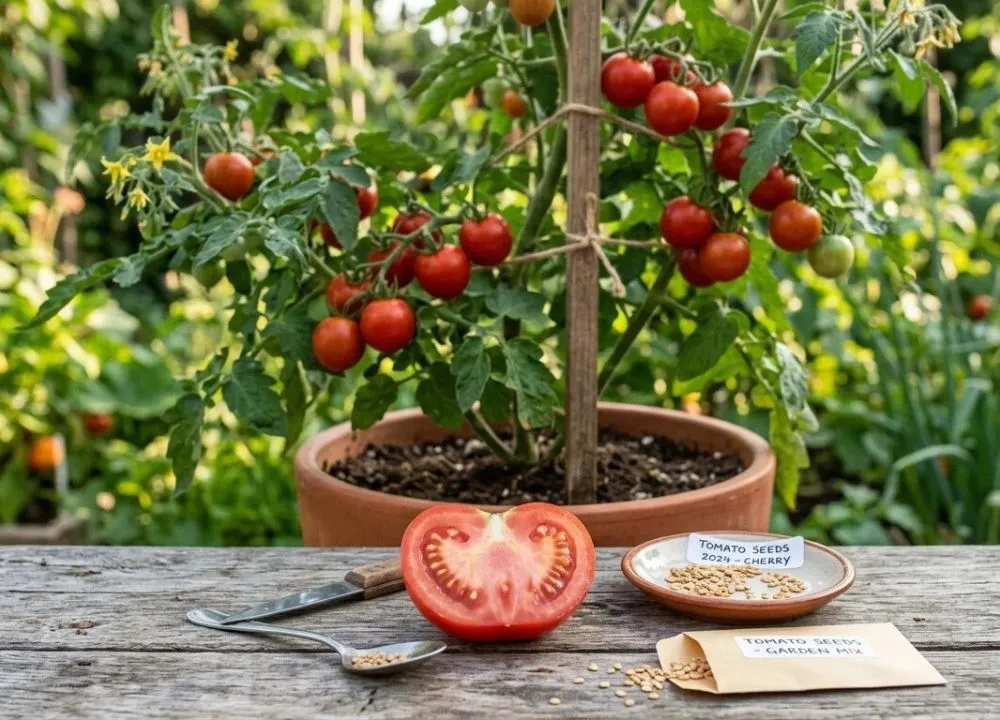
f you garden in a mild-winter region, October isn’t the end of anything. It’s one of the best planting windows you get all year.
Across the warmer parts of the country, roughly USDA zones 9 and 10 plus the subtropical belt, summer heat is the real enemy of tomatoes, not cold. Once that brutal heat breaks in fall, flowers set fruit far more reliably than they did in July.
That’s why so many southern gardeners run a fall crop on purpose. In much of Florida, tomatoes get planted twice a year, and warm pockets of Texas and Georgia can squeeze in a late crop too.
Expect this season to move slower than summer. Cooler, shorter days mean later ripening, so a fall crop takes its time. Growers who already push tomatoes through summer heat usually find the fall version easier, since the plants aren’t fighting the sun anymore.
Growing Tomatoes in October in Cold, Frost-Prone Climates
In colder regions, the story flips completely. By October the outdoor tomato season is closing its doors, and starting fresh plants just isn’t realistic.
Do the math from earlier and it’s obvious why. A tomato started now would need two-plus months of warmth, but frost is often only weeks away in zones like Colorado and Massachusetts. The plant would never reach ripe fruit.
So the goal shifts. Instead of planting, you’re now protecting and ripening whatever is already growing on the vine.
That might mean shielding plants from the first light frosts, or deciding it’s time to pull them. Some gardeners try to overwinter their plants indoors, though whether a tomato can really survive winter depends heavily on your setup. A heated space helps, which is why some move plants indoors or into a greenhouse for the cold months.
Can You Plant Tomatoes in October?
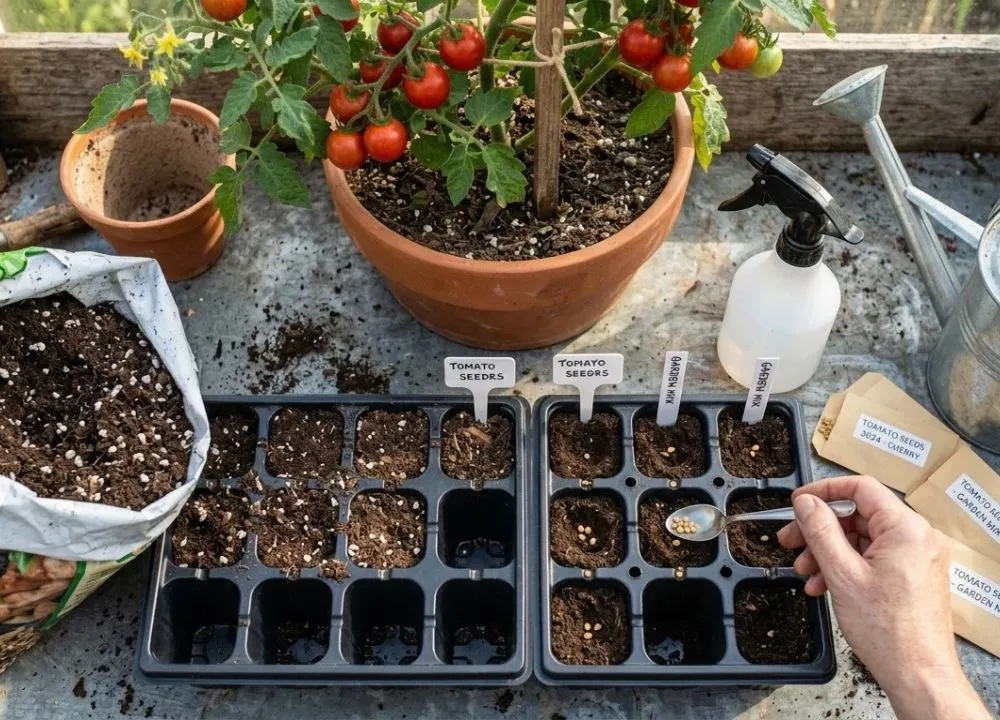
If your climate gave you the green light above, here’s how to actually plant with the clock ticking.
Skip the seed packet. This late, starting from seed wastes weeks you don’t have, so grab established transplants from a nursery instead and get a running head start.
Variety choice matters more now than at any other time of year. Reach for short-season or determinate types and read the days-to-maturity number on the label, since a 65-day determinate finishes far sooner than an 85-day beefsteak.
Then work backward. Take your first-frost date, subtract the variety’s days to maturity, and add a couple of weeks of cushion for slower fall growth. If the plant still finishes in time, you’re clear. Gardeners in warm pockets often ask if it’s too late to start, and this backward count is how you settle it. It’s the same logic behind picking the best time to plant tomato seeds in any season.
Will Tomatoes Ripen in October?
For fruit already on the plant, October ripening comes down to temperature, and the news is mixed.
Ripening slows sharply as the air cools, and it can stall almost completely once temperatures drop below about 50°F (10°C). Tomatoes need warmth to color up, not sunshine, so a chilly October simply doesn’t give them what they want.
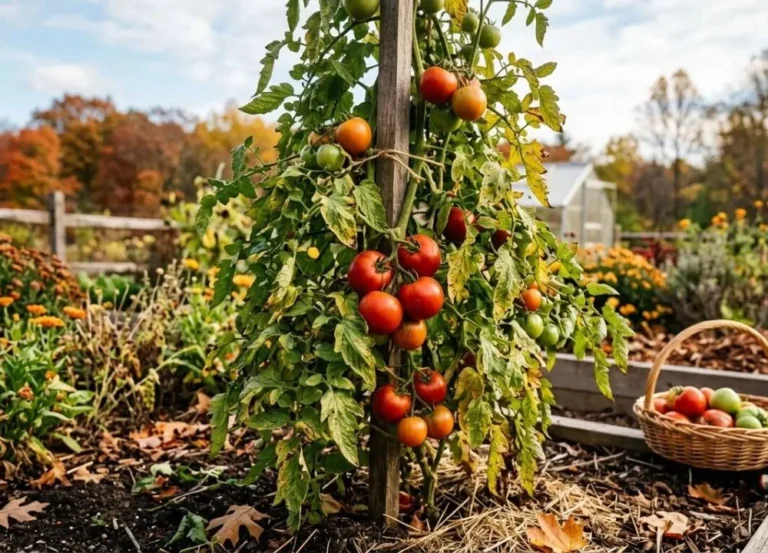
What that looks like depends on your climate. In warm zones, fruit keeps reddening on the vine at a lazy but steady pace all month. In cold zones, you’ll watch tomatoes sit stubbornly green while the nights turn frosty.
That green-tomato standoff is where most northern gardeners land by mid-October. The fruit is full-sized but won’t turn, and a hard frost is closing in fast. When that happens, stop waiting on the plant and step in yourself.
How to Ripen Green Tomatoes in October?
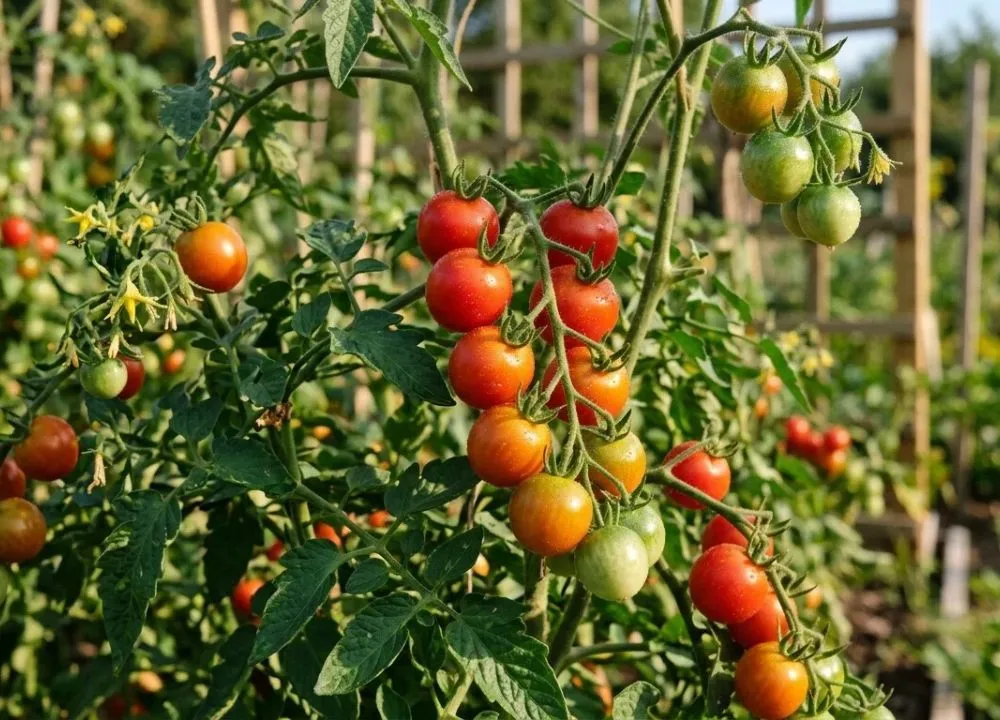
When cold threatens and the vine won’t cooperate, you ripen the fruit off the plant. It works because tomatoes are climacteric, meaning they keep ripening after picking as long as they were mature enough when you pulled them.
Start by sorting. Only fruit that reached full size with a glossy skin and maybe a blush at the blossom end will ripen well, so set the tiny immature ones aside for green-tomato recipes.
The rest is about ethylene, the natural gas that drives ripening. Here are the methods that actually work in October:
- Paper bag: Add a ripe banana or apple, fold it loosely shut, keep it warm.
- Cardboard box: Lay fruit in a single layer, tuck in a banana, check daily.
- Windowsill: Set tomatoes in a warm spot, no direct sun needed.
- Hang the whole plant: Pull it up by the roots, hang it in a garage or shed.
Keep everything around 65°F to 75°F and check every day for softening fruit or any sign of rot, since one bad tomato spoils its neighbors. Most batches turn in one to two weeks. Never refrigerate green tomatoes, because cold flattens the flavor for good, and if you’d rather hold them longer, there are smarter ways to store them for winter. Before you pull the plants for good, it’s also worth learning to cut them back if you hope to save any.
One Month, Two Playbooks: Planting or Ripening
October really does reward two completely opposite approaches, and your frost date alone decides which one is yours.
If warm weather stretches ahead, you plant, choosing quick transplants and counting the days to beat the cold. If frost is bearing down, you ripen, rescuing every green tomato off the vine before the season slams shut.
There’s no single right answer here, only the right answer for your climate. Figure out which camp you’re in, run the numbers, and commit to that playbook.
Whatever you do, don’t let a single green tomato rot on the vine out of indecision. One path plants the future, the other saves the present, and October has room for exactly one of them in your garden.